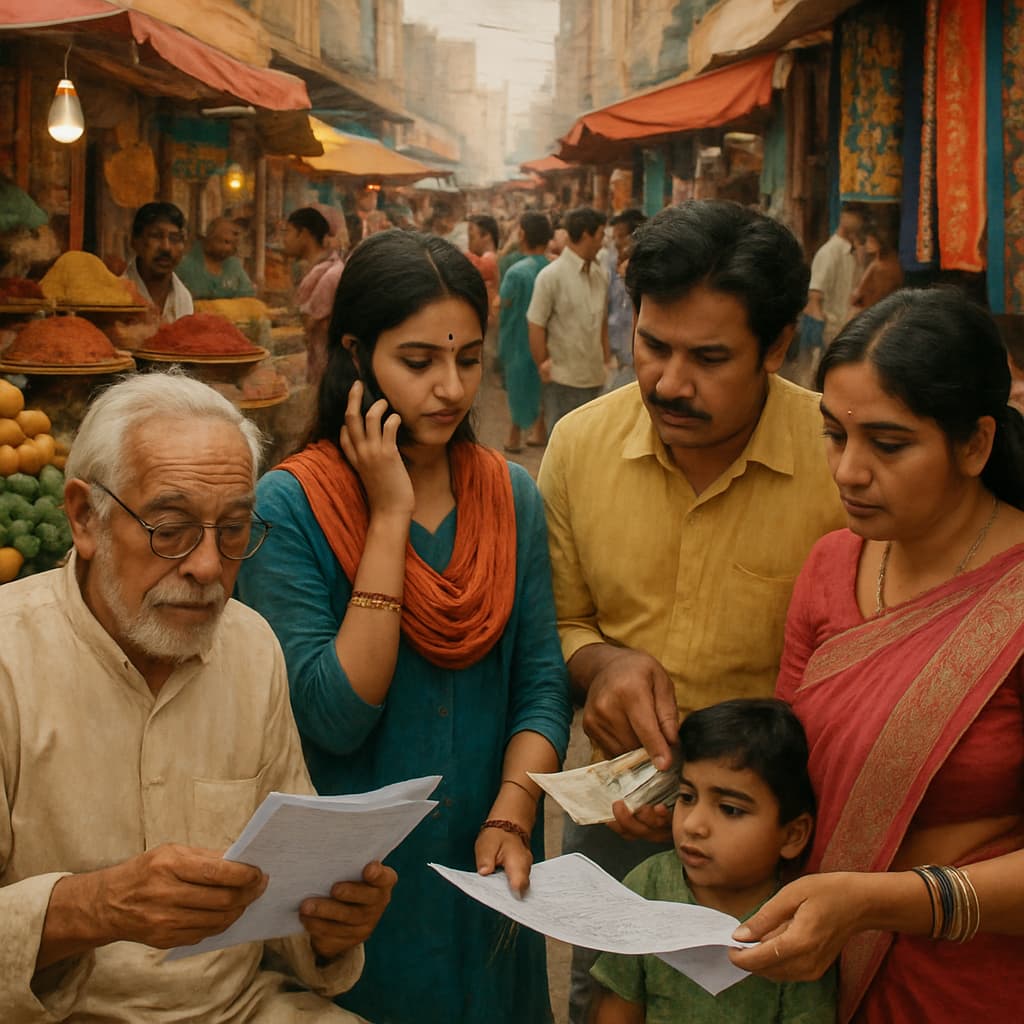
Home Loan Prepayment vs Increasing EMI After RBI's Rate Hike: Which Saves You More
 ✨ AI Generated
If your home loan rate just moved up after the Reserve Bank of India's October rate hike, the better move for most borrowers is a part-prepayment with idle cash, followed by holding your EMI steady instead of stretching the tenure — prepayment cuts the principal the higher rate applies to, while keeping the EMI fixed (rather than letting the bank quietly add months to your loan) avoids paying thousands of extra rupees in interest over the life of the loan. Which of the two actually suits you, though, depends on how much spare cash you have and how many years are left on the loan.
The Reserve Bank's Monetary Policy Committee raised the repo rate by 25 basis points to 5.50% on October 7, 2026 — the first hike since February 2023 — and shifted its policy stance from "neutral" to "calibrated tightening," according to 5paisa and Outlook Money. The Standing Deposit Facility rate now stands at 5.25%, with the Marginal Standing Facility and Bank Rate at 5.75%. The RBI is projecting FY27 GDP growth of 7.1% and CPI inflation of 5.2%, and Governor Sanjay Malhotra has indicated a rate cut is off the table for now — the next move could be another hike or a pause, with the next MPC meeting due December 2–4, 2026.
Pralay Mondal, MD & CEO of CSB Bank, called the hike a "prudent step" amid an uncertain global environment, adding that "the underlying stress in inflation for the next few quarters warranted some steps in time to prevent further escalation," as reported by the Free Press Journal. For most borrowers on repo-linked (EBLR) floating-rate loans, that 25 bps pass-through shows up at the next reset date, usually within one to three months.
How much more will you actually pay?
The exact increase depends on your lender's benchmark, your spread, and remaining tenure, but the Free Press Journal's worked example — a 20-year loan moving from 7.50% to 7.75% — gives a useful sense of scale:
- Rs 20 lakh loan: EMI rises from roughly Rs 16,112 to Rs 16,419 — about Rs 307 more a month
- Rs 30 lakh loan: EMI rises from roughly Rs 24,168 to Rs 24,628 — about Rs 460 more a month
- Rs 50 lakh loan: EMI rises from roughly Rs 40,280 to Rs 41,047 — about Rs 767 more a month
That looks small month to month, but over a 15–20 year remaining term it adds up to well over a lakh in extra interest on a Rs 50 lakh loan. Lenders on repo-linked loans are required to pass through the change at your next reset; MCLR-linked loans reprice on a different cycle but eventually absorb hikes too, per emicalculator.net's borrower guide.
Prepay, raise the EMI, or stretch the tenure?
When a lender passes on a rate hike, it typically offers to either keep your EMI the same and extend the tenure, or keep the tenure the same and raise the EMI. The emicalculator.net guide is blunt about it: "neither outcome is good" — you either pay for more months or you pay more each month, and either way the total interest you hand over goes up. A third option — a lump-sum part-prepayment — lets you cancel out the hike's effect on your EMI or tenure, but it isn't free money: you're still paying the higher rate, and you're putting cash into the loan on top of it.
The guide's own worked example, for a Rs 50 lakh, 15-year loan originally at 6.5%, shows what it takes to neutralise each successive rate step and hold the EMI and tenure where they started:
- At 7.0% (EMI would otherwise rise to Rs 44,941, tenure to 190 months): a Rs 1,54,206 prepayment keeps it at the original terms
- At 7.5% (EMI would otherwise rise to Rs 46,351, tenure to 203 months): a Rs 3,01,533 prepayment keeps it at the original terms
- At 8.0% (EMI would otherwise rise to Rs 47,783, tenure to 218 months): a Rs 4,42,340 prepayment keeps it at the original terms
- At 8.5% (EMI would otherwise rise to Rs 49,237, tenure to 238 months): a Rs 5,76,966 prepayment keeps it at the original terms
The prepayment amount needed rises faster than the rate itself, because it has to offset a growing gap over a long remaining tenure. That's why experts quoted in earlier coverage of previous hike cycles have consistently told borrowers to use prepayment money that is genuinely idle — a bonus, a matured fixed deposit, a maturing investment — and never an emergency fund, since the loan doesn't go away even after you prepay; you've just reduced its size.
If you can't prepay a meaningful chunk right now, choose a higher EMI over a longer tenure whenever your lender gives you the choice — stretching the tenure on an already long loan is the option that costs you the most extra interest over time.
What it means for you
If you have a smaller loan (around Rs 20–30 lakh) and the EMI increase is under Rs 500 a month, absorbing it into your budget is usually simpler than prepaying — the admin cost and opportunity cost of a prepayment often aren't worth it for that small a gap. If you're carrying a larger loan (Rs 50 lakh or more) with 10+ years remaining, even a modest prepayment now — before more hikes potentially arrive — reduces the base the next hike will compound on. If your lender defaults to extending your tenure, actively call and ask to raise the EMI instead, especially if you're already past the midpoint of your loan, since early years carry the heaviest interest component. And if you're shopping for a new loan right now, remember this is the first hike since 2023 in an environment where the RBI says further tightening — not a cut — is more likely in the near term, which affects how much cushion to build into your budget for a floating-rate EMI versus locking in a fixed rate where your lender offers one.
Run your own numbers before deciding — the exact prepayment-versus-EMI math depends on your outstanding principal, remaining tenure and exact rate, which is exactly what a calculator does better than a rule of thumb. You can work out your new EMI, or test how much a specific prepayment would save, using DesiSearch's EMI calculator.
Sources: 5paisa, Outlook Money, Free Press Journal, and emicalculator.net.
⚠️ AI Content Disclaimer
All article summaries on this site are generated by AI and may contain inaccuracies, omissions, or errors. Images are AI-generated and may not represent actual events or people. DesiSearch is not responsible for any errors in AI-generated content.